
Choosing Memory Care in St. Petersburg, FL often begins long before a family feels ready to make a decision. It may start with a missed medication, a familiar route that suddenly becomes confusing, increasing isolation, or the realization that everyday routines now require more reminders and supervision than they once did.
For many families, the hardest part is not recognizing that something has changed. It is understanding what level of support is appropriate, when additional care may be needed, and how to choose a Memory Care community that supports both safety and quality of life.
Some of the most common concerns families face include:
- Safety at home
Wandering, falls, leaving appliances on, medication mistakes, or difficulty responding appropriately to an emergency can make a once-familiar home increasingly difficult to navigate safely. - Changes that are easy to minimize at first
Memory loss is not always dramatic. Repeated questions, missed appointments, difficulty following familiar routines, changes in judgment, or increased confusion can develop gradually. - Knowing when family support is no longer enough
A loved one may still appear independent while relying heavily on a spouse, adult child, neighbor, or caregiver to keep daily life functioning behind the scenes. - The emotional weight of considering Memory Care
Families often wrestle with guilt, uncertainty, and the fear that choosing additional support means taking independence away. In reality, the right environment can help preserve abilities while providing support where it is genuinely needed. - Finding care that goes beyond supervision
Families increasingly want to know how a community supports cognitive engagement, meaningful routines, social connection, personal preferences, mobility, nutrition, and emotional well-being. - Understanding what personalized Memory Care actually means
Dementia affects every person differently. Strong Memory Care should respond to an individual’s history, routines, interests, abilities, communication style, and changing needs rather than relying on a one-size-fits-all approach. - Evaluating staffing and day-to-day support
Families should feel comfortable asking who is available throughout the day and night, how team members are trained, how changes in a resident’s condition are communicated, and how care plans evolve over time. - Preserving dignity and a sense of identity
Memory Care should not be defined only by what a person can no longer do. The right community creates opportunities for residents to make choices, participate, connect with others, and continue experiencing purpose in everyday life.
For families exploring Memory Care in St. Petersburg, the goal is not simply to find more help. It is to understand which environment can provide the right combination of specialized support, familiarity, safety, engagement, and human connection for the person they love.
When Does a Loved One Need Memory Care?
The need for Memory Care is rarely defined by one dramatic event. More often, families begin to notice that daily life is becoming harder to manage, even when a loved one still appears relatively independent.
A useful way to evaluate the situation is to look beyond memory loss itself and ask how cognitive changes are affecting safety, judgment, routines, social connection, and the amount of support required each day.
Look for Patterns, Not Isolated Moments
One forgotten appointment is different from a growing pattern of confusion. Families may want to pay closer attention when they notice:
- repeated medication mistakes or missed doses
- difficulty following familiar routines
- confusion in familiar places
- changes in judgment around driving, finances, or cooking
- wandering or attempts to leave home unexpectedly
- increasing anxiety when routines change
- withdrawal from social activities
- frequent prompting needed for meals, hygiene, or appointments
- greater confusion in the afternoon or evening
The key question is not simply “Can they still do this?” but “Can they do it safely and consistently without someone else managing the process?”
Consider the Amount of Invisible Support
A loved one may still seem independent because a spouse or adult child is quietly keeping everything organized.
If someone else is increasingly responsible for medications, meals, transportation, appointments, reminders, finances, or supervision, the current level of independence may depend heavily on that support.
This is often an important sign that it is time to explore whether a more structured environment could help.
Evaluate Quality of Life, Not Only Safety
Safety is critical, but it should not be the only measure.
Ask whether your loved one is still:
- engaging in meaningful activities
- eating regularly and well
- maintaining social relationships
- moving through the day with confidence
- participating in familiar routines
- experiencing purpose and enjoyment
A person can be technically safe at home while becoming increasingly isolated, inactive, or anxious.
Include Caregiver Capacity in the Decision
Memory Care may also become appropriate when one family member must remain constantly available for the current arrangement to work.
If caregiving is beginning to affect sleep, work, health, relationships, or the ability to spend meaningful time together, that is part of the care equation too.
Ask a Better Question
Instead of asking only:
“Is it bad enough for Memory Care?”
families may find it more useful to ask:
“What environment would help my loved one function at their best right now?”
The right Memory Care setting should provide more than supervision. It should create structure, familiarity, social connection, personalized support, and opportunities for the individual to continue using the abilities they still have.
For families exploring Memory Care in St. Petersburg, FL, the goal is not simply to respond to decline. It is to identify the environment that can best support safety, dignity, engagement, and everyday quality of life.
What Should Families Look for in a Memory Care Community?
Choosing Memory Care requires looking beyond a list of amenities. Two communities may both offer secure spaces, activities, meals, and 24-hour support, yet create very different experiences for a person living with dementia.
The more useful question is: How does this community help a resident function, connect, and retain a sense of self throughout the day?
Person-centered dementia care should reflect the individual’s abilities, history, preferences, communication style, and changing needs rather than expecting every resident to fit the same routine. These principles are also reflected in dementia care recommendations from the Alzheimer’s Association.
A Smarter Checklist for Your Memory Care Tour
Instead of asking only what a community offers, pay attention to how care actually works.
- Ask how the team learns who your loved one was before dementia became part of the story.
Do they ask about former careers, family roles, favorite music, meaningful routines, hobbies, food preferences, or what tends to bring comfort? Personalized care begins with knowing the person, not simply the diagnosis. - Find out what happens on an ordinary Tuesday at 2:00 p.m.
Activity calendars can look impressive. Ask what residents actually do between scheduled programs. Are people engaged, resting comfortably, walking, talking with associates, or primarily sitting without meaningful interaction? - Watch how associates communicate with residents.
Do they approach from the front, make eye contact, allow time for a response, offer choices, and redirect calmly? The quality of everyday interactions can tell you more about a Memory Care culture than a brochure can. - Ask how the community responds when someone says “no.”
Dementia care often involves moments when bathing, eating, medication, or an activity does not make sense to the resident. Ask whether associates simply repeat the request or try a different approach, time, environment, or familiar cue. - Look for useful structure without unnecessary rigidity.
Predictable routines can reduce uncertainty, but good Memory Care should still recognize individual rhythms. Ask what happens if someone wakes later, prefers a different mealtime, needs quiet after lunch, or has always been most active in the evening. - Ask how they distinguish a “behavior” from an unmet need.
Agitation, withdrawal, pacing, or resistance may communicate discomfort, overstimulation, hunger, pain, fear, or confusion. Ask how the team investigates what may be driving a change before deciding how to respond. - Find out how a resident’s abilities are preserved, not just supported.
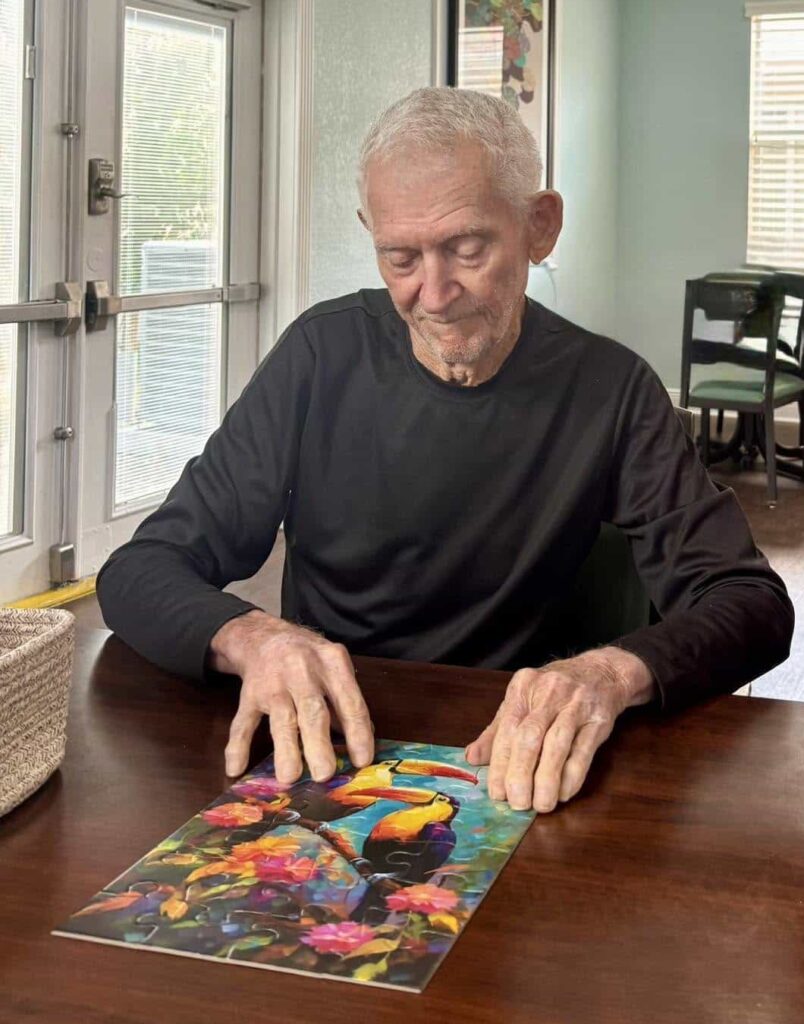
If someone can still choose clothing, fold towels, help set a table, walk independently, garden, or participate in part of a familiar task, are they encouraged to continue? High-quality support should avoid unnecessarily doing for residents what they may still be able to do with the right cue or environment. - Observe whether the environment makes sense without explanation.
Can residents easily recognize important spaces? Is there excessive noise or visual clutter? Can they move safely without encountering constant barriers? Dementia-friendly design is not simply about security; it should also make everyday navigation more intuitive. - Ask what changes when your loved one changes.
Dementia is progressive, so the care plan that works today may not be appropriate six months from now. Ask how often needs are reassessed, who participates in those conversations, and how families are informed when the team notices a meaningful change. - Pay attention to the residents themselves.
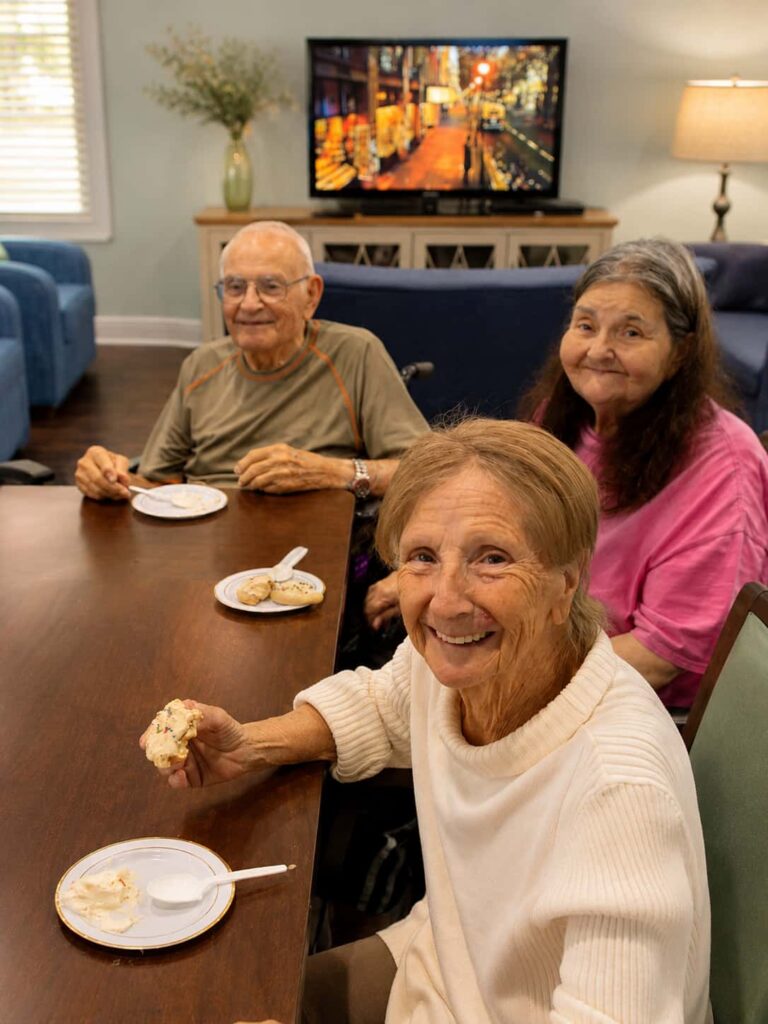
Do people appear relaxed? Are associates talking with residents rather than only completing tasks around them? Are there spontaneous moments of humor, conversation, movement, or affection? These details can reveal whether daily life feels institutional or genuinely relational. - Ask yourself one final question after the tour:
“Can I picture my loved one having a good day here?”
Not merely a safe day. A good one.
What This Can Look Like at The Goldton at St. Petersburg
At The Goldton at St. Petersburg, this more personal philosophy is reflected in the community’s SPIRIT Memory Care Program, which focuses on strengthening minds, purpose, identity, celebrating small successes, daily engagement, and programming tailored to the individual.
That approach matters because meaningful Memory Care is not built around keeping every resident occupied in the same way. It begins by understanding what creates familiarity, confidence, interest, and connection for that particular person.
Residents also have access to associates on-site around the clock, medication management and assistance with daily routines, while structured programming and community life provide opportunities for engagement and social connection. The Goldton’s broader programs include flexible dining and activities intended to support residents’ interests and everyday quality of life.
For families comparing Memory Care in St. Petersburg, FL, the objective should therefore extend beyond finding a secure place with appropriate assistance.
Look for a community capable of answering a more meaningful question:
How will you help my loved one remain recognizable to themselves, connected to other people, and involved in a life that still belongs to them?
The answer to that question can reveal far more about the quality of Memory Care than any amenity list ever will.