






If you’re comparing senior living options, start with the questions that shape daily life:
- How often will I genuinely look forward to meals?
- Will dining fit my rhythm, late mornings, light afternoons, long evenings, without having to “plan my hunger”?
- When family visits, can I host with ease and taste, without turning the day into logistics?
- Do the dining details support appetite, energy, and consistency over time?
Dining is one of the most decisive quality of life indicators in senior living.
Research in senior care settings links the dining experience and foodservice quality with residents’ quality of life outcomes (Carrier, West, & Ouellet, 2009). For many older adults, the table is more than a meal. It is a daily structure that affects nutrition, hydration, mood, and autonomy.
A chef sees the experience as a system, not a plate.
Flavor matters, but so do temperature, texture, pacing, and the room itself. Studies exploring dining comfort in elder care environments show that physical and sensory factors, including comfort and ambience, influence how older adults experience meals (Mu & Kang, 2023). Appetite is responsive. It rises in rooms that feel calm, welcoming, and thoughtfully composed.
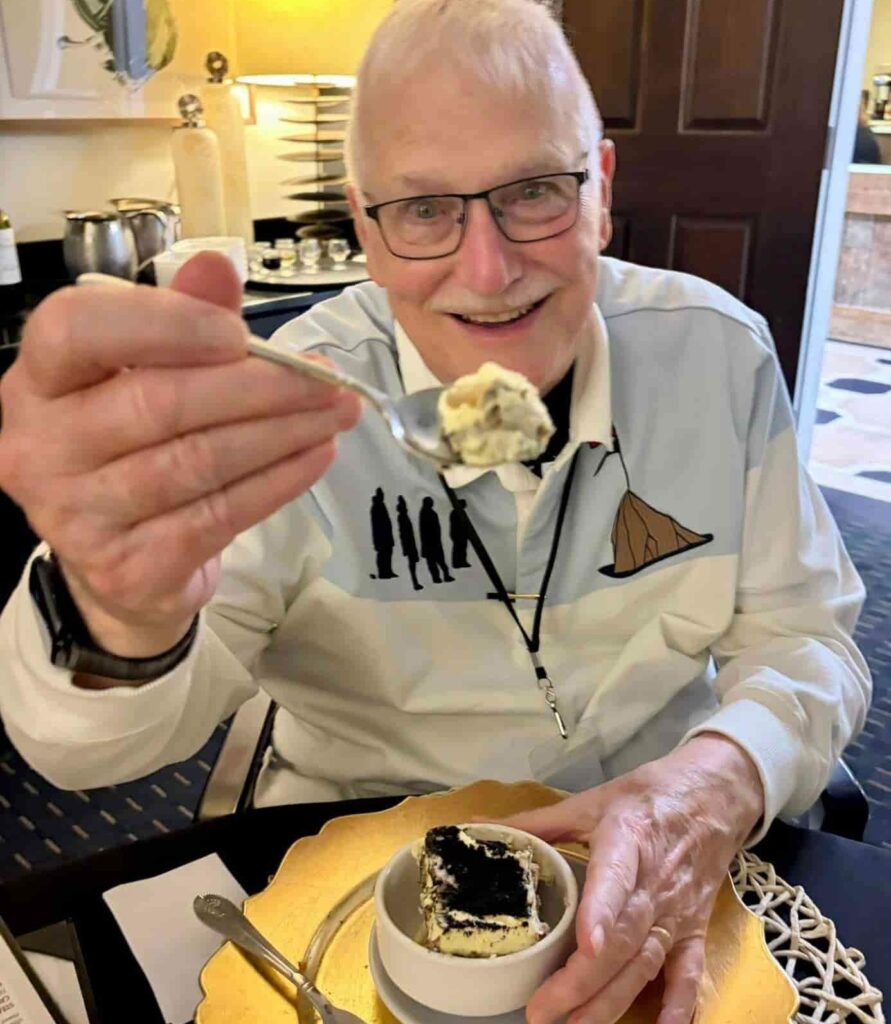
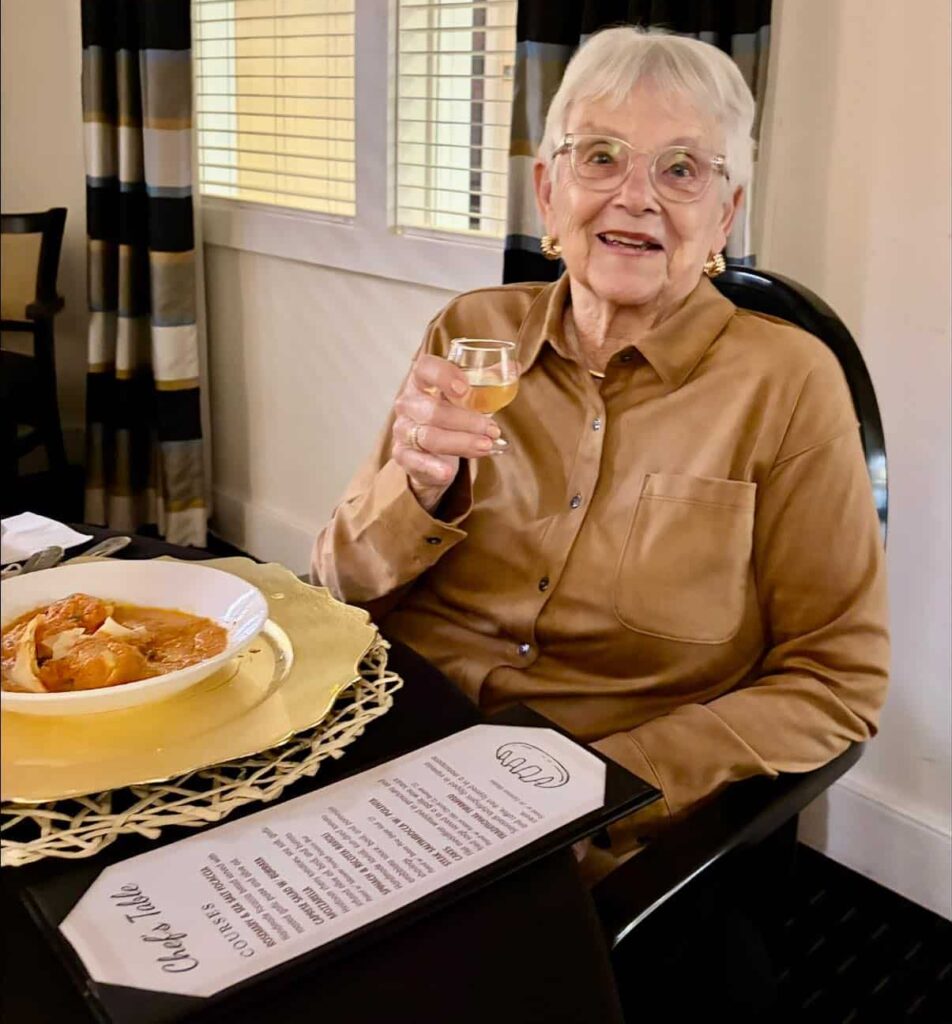
Meals also carry social architecture.
Large-scale wellbeing evidence shows that shared meals are strongly associated with greater life satisfaction and positive affect, alongside stronger social connection (De Neve, Dugan, Kaats, & Prati, 2025). For seniors, this matters because social nourishment often arrives in small, repeatable moments. A familiar table. A server who remembers preferences. A friend who saves you a seat.
This is the lens for Freedom Dining at Legacy Reserve at Fritz Farm.
Residents have all-day flexibility and multiple on-site venues, which allows dining to match the day you are actually having. A lighter bite when you want quiet. A more polished dinner when people come in. A casual meal with a game on when you feel playful. Seasonal celebrations also show up on the plate, with themed menus that align with holidays, cultural moments, and community events. The result is simple to describe and hard to replace: daily choice, delivered with culinary intention.
What “All-Day Dining” Looks Like in Real Life
All-day dining sounds simple.
The real difference shows up in the small decisions you no longer have to force.
Start here: which version of your day feels most familiar?
- The slow morning. You wake up later and want the day to begin gently.
- The appointment day. A doctor’s visit, errands, or guests shift your usual timing.
- The social day. You want conversation, energy, and a dining experience that feels lively.
- The quiet day. You want something satisfying without turning the whole day into a production.
All-day dining works best when dining can follow your rhythm instead of asking you to constantly follow a rigid schedule.
Four real-life scenes
1) The late breakfast that still feels relaxed
You wake up at 09:30. You are not “behind.”
You’re choosing the pace. A continental breakfast is available daily, and you can still build a morning that feels composed, not improvised.
The elevated detail: When breakfast is flexible, hydration and protein tend to improve because you’re eating when you actually want to eat, not when the clock demands it.
2) The “I’m hungry now” lunch that still feels like a real meal
It’s 2:17 PM. Your morning took longer than expected.
In many places, that means lunch is essentially over and your only option is to piece something together. Here, the all-day dining option available through the Bluegrass Bistro gives you a way to enjoy a proper meal without feeling like you missed your chance.
That difference may sound subtle, but it changes the tone of the day. Hunger does not always arrive on schedule, and a community dining experience should be able to respond to that with flexibility and ease.
Ask yourself: Do you want your meals to adapt to your life, or your life to orbit mealtimes?
3) The evening when choice becomes part of the experience
As the day shifts into evening, dining can take on a different character.
At Legacy Reserve at Fritz Farm, residents can enjoy a range of settings depending on the kind of evening they want:
- Bluegrass Bistro for lighter fare and a more relaxed feel
- Bernard’s Sports Bar for a casual, social atmosphere
- Chandler’s Dining for a more polished, sit-down experience
Placing those venues within the day this way matters because it reflects how people actually choose to dine. Sometimes the goal is convenience. Sometimes it is comfort. Sometimes it is ambiance.
4) The unplanned family visit that turns into a proper evening
A relative stops by. What begins as a short visit turns into dinner.
That kind of moment feels easier when the community is already designed to support it.
Hosting features that matter:
- Multiple on-site dining settings for different moods
- Private dining for intimate gatherings and special occasions
- Catering options when you want everything handled beautifully
- Room service for evenings that call for something quieter
The luxury is not only in the food. It is in how little coordination the moment requires.
5) The night where the calendar becomes edible
A themed celebration arrives, and the community marks it not only through activities, but through food and atmosphere that reflect the occasion.
That is more meaningful than it may first appear.
Why it works:
Memory is sensory. Taste and aroma help anchor a moment in time. When seasonal or themed dining is done thoughtfully, an event feels more vivid, more social, and more emotionally memorable.
Chef-Driven Comfort With a Twist: The Dishes Residents Talk About
A chef-driven menu earns its reputation in small, repeatable moments.
The ingredients taste precise. The portions feel considered. The plate finishes clean, with satisfaction, not heaviness.
In Freedom Dining at Legacy Reserve at Fritz Farm, that philosophy shows up in three ways:
- Ingredient choices that stay honest. Fresh produce, proteins treated with respect, sauces built for balance rather than weight.
- Technique that protects texture. Crisp elements stay crisp, fish stays clean, and creamy dishes keep definition instead of turning flat.
- A menu designed for real appetite. Options that work whether you want a lighter bite, a social dinner, or something celebratory.
The resident favorites, the “repeat orders” in the program
A few signature dishes have become quiet hits because they deliver comfort with finesse:
- Ahi Tuna with blistered tomatoes and shallots. Bright, clean, and composed. It’s the plate people choose when they want something elegant that still feels light.
- Risotto with roasted cauliflower and crispy prosciutto. Classic comfort, upgraded with caramelized sweetness and a crisp savory finish.
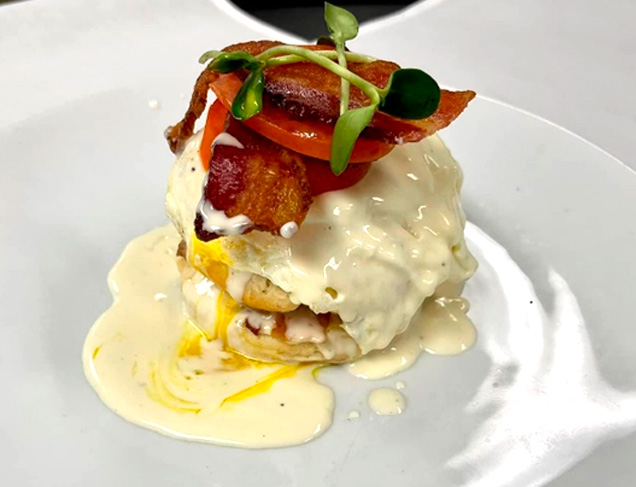
- Crab Cake Benedict with sliced avocado and microgreens. A brunch-level favorite that feels festive without being complicated, and it holds its charm even on an ordinary weekday.
Why these become “talked-about” dishes
They land in that rare zone where flavor, texture, and after-feeling align. Research in long-term care settings also connects dining quality with resident quality of life, which explains why a strong culinary program can change how a day feels, not just how a meal tastes (Carrier, West, & Ouellet, 2009).
How Celebrations Work When Dining Is Part of the Lifestyle
When you’re evaluating senior living, a surprisingly telling question is this:
What happens on the days that matter?
Not just the logistics of an event, but the feeling of it.
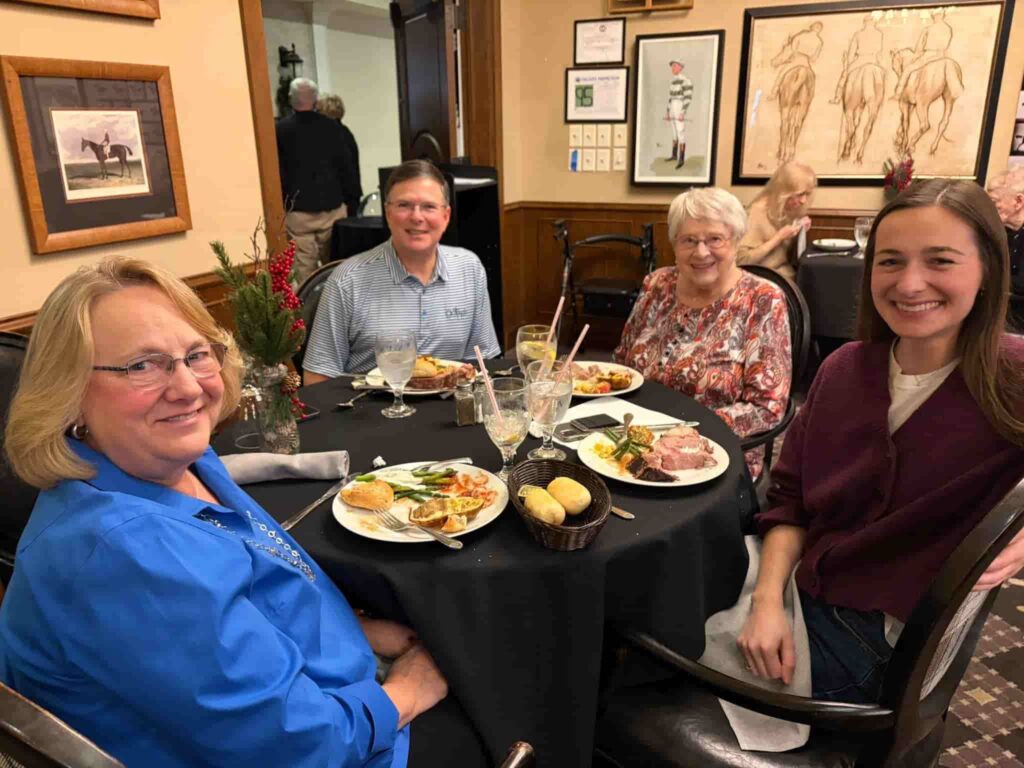
A celebration becomes real when it is shared, and the most natural place to share is the table.
Why the table matters socially, especially later in life
- Meals create recurring connection. Shared dining is one of the most consistent social rituals adults keep across decades. It reduces the friction of “making plans” because the gathering already has a reason and a rhythm (De Neve, Dugan, Kaats, & Prati, 2025).
- Food holds memory. Aroma and taste anchor time. A seasonal dish can bring back a place, a decade, a person, which is why celebrations often feel more vivid when they are edible, not only scheduled.
- It supports belonging without forcing extroversion. You can participate by showing up for a meal, even if you do not want to spend hours in a loud activity.
At Legacy Reserve at Fritz Farm, the goal is simple and non-negotiable:
every season deserves a signature moment at the table.
Celebrations are not treated as “extras.” They are designed into community life through themed menus that mirror the season, cultural moments, and holidays.
What this looks like in practice
Seasonal menus that mark time
The kitchen uses the calendar as a creative brief. Residents experience the year through flavor, not just through decorations.
Think of it as a rotating set of culinary chapters, each one with its own atmosphere.
Shared meals that feel like a social invitation
A themed menu gives people an easy reason to gather.
- “Are you going to dinner tonight?” becomes the plan.
- It opens conversation without effort, because everyone is tasting the same story.
- It turns a weekday into an occasion, without demanding formality.
Different settings for different kinds of celebration
Because Freedom Dining includes multiple venues, celebrations can be matched to mood.
- A lighter, casual theme night.
- A more polished evening when families are visiting.
- A game-night energy when residents want something fun and lively.
Family moments that don’t require hosting stress
Private dining and catering options matter most on special dates.
They allow families to show up and be present, instead of managing a kitchen or cleaning up afterward. The celebration stays centered on people.
References:
Carrier, N., West, G. E., & Ouellet, D. (2009). Dining experience, foodservices and staffing are associated with quality of life in elderly nursing home residents. The Journal of Nutrition, Health & Aging, 13(6), 565–570. https://doi.org/10.1007/s12603-009-0108-8
De Neve, J.-E., Dugan, A., Kaats, M., & Prati, A. (2025). Sharing meals with others: How sharing meals supports happiness and social connections (World Happiness Report 2025, Chapter 3). World Happiness Report. https://doi.org/10.18724/whr-g119-bv60
Mu, J., & Kang, J. (2023). Dining comfort in elderly care facility dining rooms and influencing factors before and after the outbreak of the COVID-19 pandemic. Frontiers in Psychology, 14, 1106741. https://doi.org/10.3389/fpsyg.2023.1106741