






Mother’s Day can stir up complicated emotions when dementia is part of your family’s story.
You may be asking yourself questions that many families quietly carry:
- Should we celebrate the way we always have?
- What if Mom does not fully understand the day?
- What actually feels meaningful now?
- How do we create joy without pressure, confusion, or disappointment?
For many families, the hardest part is not love. It is redefining what connection looks like when memory changes.
A familiar brunch may feel overwhelming. A detailed family gathering may create fatigue. Even well-meaning questions can sometimes lead to frustration. This often leaves loved ones wondering how to honor Mom in ways that feel thoughtful, emotionally safe, and genuinely comforting.
The good news is that Mother’s Day does not lose its meaning simply because dementia changes the experience. In many cases, it becomes an opportunity to focus on something deeper. Emotional presence. Sensory comfort. Identity. Gentle moments that meet her where she is now.
1. Build the Day Around Familiar Sensations
When families picture Mother’s Day, they often imagine conversation first. Long lunches, old stories, favorite traditions, and familiar jokes. Dementia can change how those moments unfold, which sometimes creates unnecessary disappointment when a loved one cannot engage the way she once did.
This is where sensory connection becomes incredibly powerful.
The brain often processes emotional and sensory familiarity differently than direct memory recall. A scent, sound, texture, or routine can spark calm, recognition, and comfort even when names, dates, or specific memories feel distant.
Think about the details that once shaped her daily life:
- Did she always wear a certain perfume?
- Was there a breakfast she loved making every Mother’s Day?
- Did she have a favorite lipstick shade, cardigan, or flower?
- What songs filled her kitchen, car rides, or Sunday mornings?
These details may seem small, but they can create a stronger emotional bridge than trying to force verbal recall.
For example:
✔ Playing music from her 20s or 30s during a quiet visit
✔ Bringing her favorite hand lotion and offering a gentle hand massage
✔ Setting the table with familiar recipes or desserts
✔ Brushing her hair the way she always styled it
✔ Surrounding her with roses, lavender, or scents tied to positive memories
These experiences can help create a sense of safety and identity.
Many families underestimate how powerful “feeling familiar” can be. Mother’s Day does not always need to center around remembering the past in words. Sometimes it begins with helping her body and heart recognize love through comfort.
2. Ask Fewer Memory Questions and Share More Stories
One of the most common ways families unintentionally create stress is through memory-based questions.
“Do you remember this?”
“Do you know who this is?”
“Remember when we used to…?”
These questions usually come from love. They come from longing, hope, and the desire to reconnect. Yet for someone living with dementia, they can sometimes feel like being asked to find an answer in a place that no longer works the same way.
This can lead to frustration, embarrassment, or emotional withdrawal.
A more supportive approach often comes from storytelling instead of testing.
Rather than asking her to retrieve details, bring the memory to her gently:
- “You made Christmas feel magical every year.”
- “I still laugh when I think about your road trip playlists.”
- “Your Sunday dinners made everyone feel at home.”
- “You always knew how to make me feel better.”
This allows her to receive love without pressure.
Even if she cannot recall the exact event, she may still respond emotionally to warmth, tone, affection, and familiarity.
This approach also changes the emotional energy of the day. Instead of asking her to prove memory, you are offering her identity back to her.
It becomes less about performance and more about presence.
A helpful checklist for families:
✔ Replace direct memory tests with affirming statements
✔ Focus on emotional truth, not factual precision
✔ Keep stories simple and warm
✔ Use photos as invitations, not quizzes
✔ Allow silence without rushing to fill it
Mother’s Day can feel lighter when the goal shifts from remembering perfectly to feeling connected meaningfully.
3. Bring Pieces of Her Identity Into the Celebration
Dementia can sometimes cause families to focus so heavily on care needs that they unintentionally lose sight of the whole person.
She is still more than her diagnosis.
She may still be the woman who loved jazz, wore bold red lipstick, gardened every morning, hosted holidays, prayed daily, painted, danced, or laughed louder than anyone else in the room.
Mother’s Day can become a powerful opportunity to reconnect with who she has always been.
Ask yourself:
- What made her feel most like herself?
- What did she love before routines became medical?
- What personal details shaped her presence?
Then build around those answers.
Examples:
✔ A former hostess may enjoy a beautifully set tea table
✔ A woman who loved fashion may respond to favorite jewelry or elegant fabrics
✔ A spiritual mother may find peace in prayer, hymns, or sacred readings
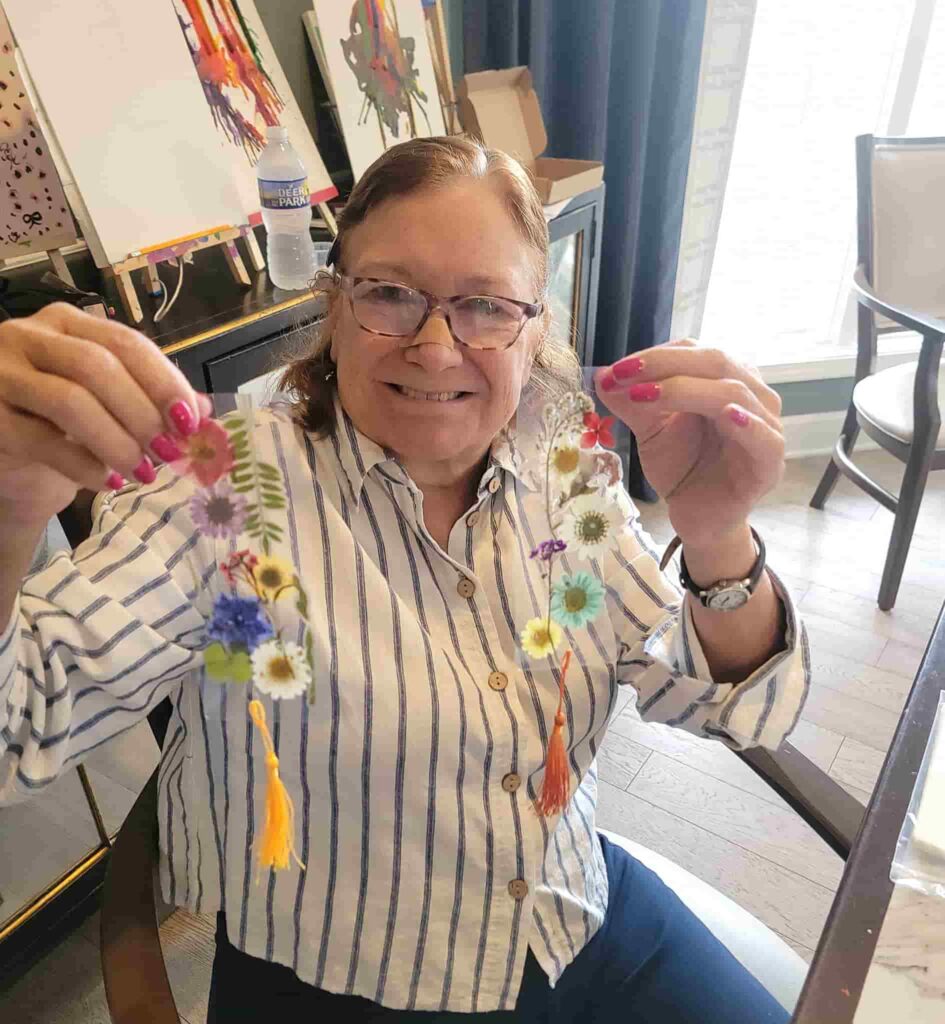
✔ A creative mother may enjoy painting, flowers, or handmade gifts
✔ A mother who loved cooking may enjoy familiar recipes, even just through scent
This kind of personalization can feel grounding because identity often lives deeper than memory alone.
Even when communication changes, emotional recognition of self can still matter profoundly.
For families, this can also be healing. It shifts the experience away from grief alone and toward honoring the full person she remains.

4. Prepare Children and Grandchildren for a Different Kind of Connection
Mother’s Day gatherings often include multiple generations, and younger family members may struggle in ways adults do not always anticipate.
A child may wonder:
“Why doesn’t Grandma remember me?”
“Did I do something wrong?”
“Why is Mom acting different?”
Without preparation, confusion can become sadness or fear.
A thoughtful conversation before the visit can transform the experience.
Simple explanations often work best:
- “Grandma’s brain works differently now.”
- “She may not remember names, but she can still feel love.”
- “Your smile, your voice, and your kindness still matter.”
This helps children understand that connection has not disappeared. It may simply look different.
Meaningful activities for younger family members can include:
✔ Singing together
✔ Drawing cards
✔ Holding hands
✔ Looking through pictures
✔ Reading aloud
✔ Sitting beside her quietly
Children often do better when given realistic expectations and simple ways to participate.
This also teaches something deeper. Love is not always measured by recognition. Sometimes love is patience, adaptability, and showing up gently.
For many families, these moments become profound lessons in empathy.
5. Leave Behind Something That Extends the Celebration
Mother’s Day can feel beautiful in the moment, but departures are often hard.
When the visit ends, families may worry:
Will she feel alone?
Will this day disappear too quickly?
How do we leave something comforting behind?
Creating an ongoing emotional touchpoint can make a meaningful difference.
Think beyond flowers alone.
Consider items that continue offering familiarity:
✔ A recorded voice message saying “I love you, Mom”
✔ A playlist of meaningful songs
✔ A labeled photo album with simple captions
✔ A soft blanket chosen by loved ones
✔ A memory box with familiar keepsakes
✔ Notes from grandchildren
These items can become emotional anchors.
For care teams, these tools can also help support connection on difficult days by reintroducing familiar voices, images, or comforting objects.
For families, this can reduce the feeling that Mother’s Day was only one brief moment.
Instead, the celebration leaves echoes.
In many cases, what remains after the visit can be just as meaningful as the visit itself. Sometimes the most loving gift is creating reassurance that lingers.