


Skin continues to evolve throughout life, and after 70, some of those changes become more noticeable. Collagen and elastin naturally decrease over time, while the skin becomes thinner and may have more difficulty retaining moisture. Years of sun exposure, lifestyle habits, medications, and overall health can also influence how skin looks and feels.
A few things worth knowing:
- Skin becomes less elastic. Changes in collagen and elastin can contribute to looser skin, fine lines, and changes in texture.
- Moisture becomes increasingly important. Older skin tends to produce less natural oil and lose water more easily, making dryness and irritation more common.
- Skin may become more delicate. Thinner skin can bruise or become irritated more easily, so gentler products and routines often work better.
- Sun protection still matters after 70. UV exposure continues to contribute to discoloration, dryness, wrinkles, and skin cancer risk.
- Small daily habits can make a visible difference. Moisturizing, protecting the skin from UV exposure, staying hydrated, and choosing gentle products can support healthier-looking skin at any age.
The goal after 70 is less about chasing younger-looking skin and more about supporting the skin you have: keeping it hydrated, protected, comfortable, and naturally radiant.
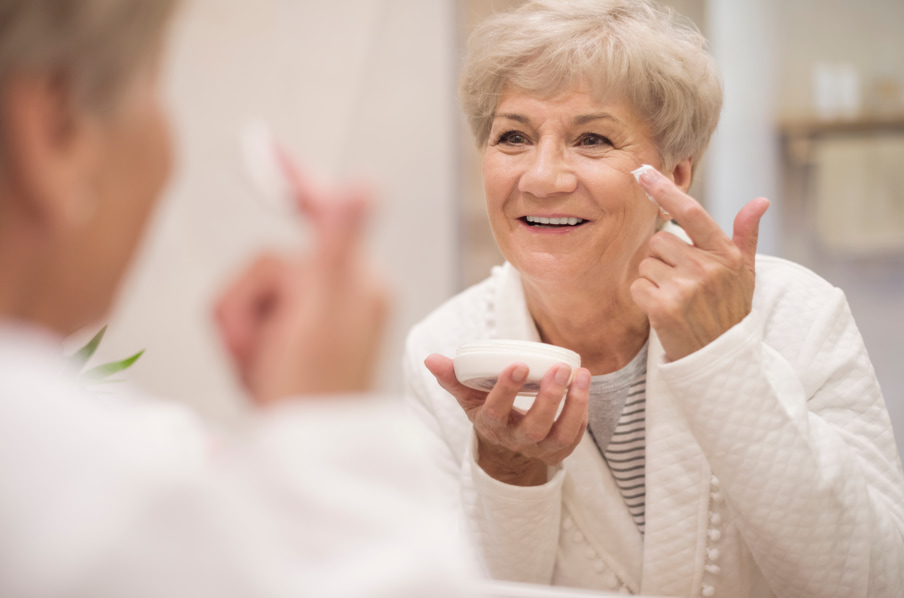
1. Hydrate Daily to Help Skin Look Plumper and More Supple
Think of hydration as a simple three-step routine:
Morning: Apply a moisturizer with ingredients such as glycerin, ceramides, or hyaluronic acid while the skin is still slightly damp.
During the day: Sip fluids regularly and include water-rich foods such as fruit, vegetables, soups, or yogurt when appropriate.
At night: Reapply a richer cream to areas that tend to feel dry, especially the face, hands, arms, and legs.
A few small adjustments can also help: choose warm rather than hot showers, avoid heavily fragranced products, and use a cream instead of a lightweight lotion if your skin still feels tight.
Guide check: Your skin should feel comfortable a few hours after moisturizing. If it already feels tight, flaky, or itchy, your routine may need a richer product or more frequent application.
2. Protect Your Skin From UV Damage Every Day
UV protection remains one of the most useful habits for preserving skin texture, tone, and elasticity after 70.
Use this simple daily rule:
Before going outside: Apply a broad-spectrum sunscreen with SPF 30 or higher to the face, neck, ears, hands, and any other exposed skin.
If you stay outdoors: Reapply about every two hours, especially after sweating or spending time near water.
Add physical protection: A wide-brimmed hat, sunglasses, lightweight long sleeves, and shade can reduce how much direct sun reaches the skin.
One detail that is easy to overlook: UV exposure still happens on cloudy days and during short everyday activities, such as walking the dog, gardening, driving, or sitting near a sunny window.
Guide check: If sunscreen is only part of your beach routine, make it part of your morning routine instead. Daily consistency is what helps protect mature skin from additional sun-related changes.
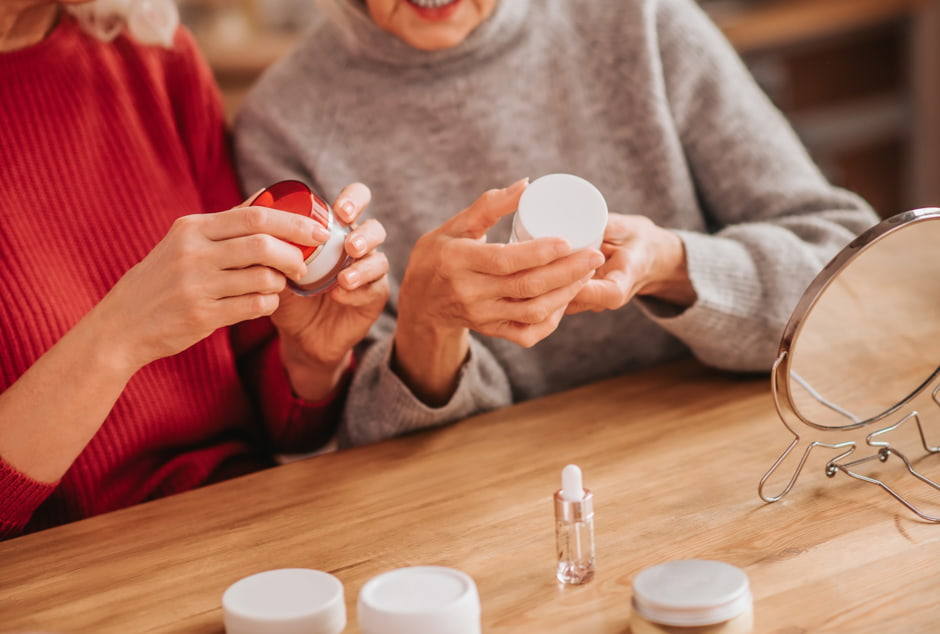
3. Support Collagen With Protein, Vitamin C, and Healthy Fats
Before your next meal, look at your plate and ask three questions:
Where is the protein?
Eggs, fish, chicken, yogurt, beans, lentils, and tofu provide amino acids the body needs to maintain tissues, including collagen.
Where is the color?
Strawberries, oranges, kiwi, tomatoes, peppers, and broccoli provide vitamin C, a nutrient involved in normal collagen formation.
Where is the healthy fat?
Olive oil, avocado, nuts, seeds, and fatty fish add fats that support skin health and help create a more nutritionally complete meal.
You do not need a complicated “beauty diet.” A breakfast of eggs with avocado and fruit, or a dinner of salmon with colorful vegetables and olive oil, already brings these nutrients together naturally.
Try the plate test: if your meal has protein, a brightly colored fruit or vegetable, and a source of healthy fat, you are already giving your skin a stronger nutritional foundation.
4. Choose Gentle Skin Care That Protects the Natural Barrier
After 70, good skin care is increasingly about preserving the skin barrier, the outermost layer responsible for keeping moisture in and irritants out.
With age, the skin tends to produce fewer natural lipids and recover more slowly from irritation. That means products that once felt harmless, such as strong cleansers, frequent exfoliation, or highly fragranced formulas, may begin to cause dryness, sensitivity, or persistent tightness.
A more sophisticated routine often means doing less, but choosing better.
Look for products that support the barrier rather than repeatedly stripping it:
- Ceramides help replenish some of the lipids naturally found between skin cells.
- Glycerin and hyaluronic acid attract and retain water within the upper layers of the skin.
- Niacinamide can support barrier function while helping improve the appearance of uneven tone and texture.
- Fragrance-free cleansers are often a better choice when mature skin becomes more reactive.
- Cream-based moisturizers generally provide more lasting protection than very lightweight lotions when dryness is persistent.
Exfoliation also deserves a different approach after 70. More frequent or more aggressive exfoliation does not necessarily create smoother skin. When the barrier is already fragile, over-exfoliating can increase inflammation and make texture appear worse.
A useful rule is to evaluate your routine by how your skin behaves afterward. Healthy skin should feel comfortable, flexible, and calm. Persistent burning, stinging, redness, or tightness is usually a sign that something in the routine needs to be simplified.
And when introducing a new product, consider adding one change at a time. This makes it much easier to identify what your skin tolerates well and what may be causing irritation.
For persistent itching, wounds that do not heal, new growths, or noticeable changes in moles or spots, a dermatologist should evaluate the skin rather than relying on cosmetic products alone.
5. Improve Circulation With Movement, Sleep, and Everyday Habits
Healthy-looking skin depends on more than topical products. It is also influenced by the systems that support the skin from within, including circulation, sleep, mobility, and overall recovery.
Regular movement helps blood circulate throughout the body, delivering oxygen and nutrients to tissues while supporting cardiovascular health. After 70, this does not need to mean intense exercise. A brisk walk, gentle stretching, gardening, swimming, chair exercises, or light strength training can all contribute when they are appropriate for your health and mobility level.
The goal is consistency.
If you spend long periods sitting, try adding short movement breaks throughout the day. Stand up, walk around the house, stretch your calves, move your shoulders, or take a few minutes outside. These small habits can support circulation while also helping maintain strength, balance, and mobility.
Sleep deserves equal attention. During sleep, the body shifts into repair and recovery processes that affect many tissues, including the skin. Poor or inconsistent sleep can also make the complexion appear duller and may make signs of fatigue more noticeable.
A few habits can support better recovery:
- Keep a relatively consistent sleep and wake schedule.
- Create a cool, comfortable sleep environment.
- Limit heavy meals, excessive alcohol, or stimulating activities close to bedtime.
- Build gentle movement into the day, which may also support better sleep quality.
- Avoid smoking, which can impair circulation and accelerate visible skin aging.
Even posture and breathing can play a role in how you feel throughout the day. Sitting upright, taking regular movement breaks, and spending time outdoors can help reduce the sluggish feeling that often comes with prolonged inactivity.
The larger idea is simple: skin health reflects whole-body health. Hydration, nutrition, movement, rest, and protection from the sun work together. No single habit will transform the skin overnight, but a consistent routine can help mature skin look healthier, feel more comfortable, and maintain its natural vitality over time.
At this stage of life, the most effective approach is often the most sustainable one: protect the skin, support the body, and choose habits you can realistically maintain every day.