






Short-term assisted living often becomes relevant at a very specific point in a family’s life. Not at the beginning of a care journey, and not always at the moment of a permanent decision, but during the complex interval between medical progress and daily reality.
A discharge date approaches. Recovery is underway, but still uneven. The home may not be fully prepared. The caregiver, however devoted, is reaching a level of fatigue that deserves just as much attention as the logistics of care. In this kind of moment, families are rarely looking for something abstract. They are looking for a practical, temporary form of support that can stabilize the present while clarifying the next step.

What is usually happening when families consider this option?
In most cases, several pressures are converging at once.
- A loved one is leaving rehab but still needs help with daily routines
- Recovery after surgery or hospitalization remains fragile
- Meals, medications, mobility, and supervision require more coordination than expected
- A spouse or adult child has taken on too much for too long
- The family needs time to assess what level of support is truly needed
This is the context in which respite care begins to matter in a very concrete way.
What respite care means in this setting
Respite care offers a short-term solution when an older adult needs support and the family needs reinforcement. Sometimes the need follows rehab. Sometimes it emerges during recovery after a hospital stay. Sometimes it becomes necessary because caregiving at home has reached a level of intensity that is no longer sustainable without rest, backup, or a temporary change in routine.
The word respite may sound simple, but the reality behind it is rarely small. It may involve physical exhaustion, interrupted sleep, constant vigilance, emotional strain, work obligations, or the pressure of making important decisions too quickly.
Why this kind of support matters
What affects a difficult month is often found in ordinary details.
- Are meals regular and nourishing?
- Are medications being taken correctly?
- Is someone available when balance becomes uncertain?
- Is the older adult moving through the day with enough structure and support?
- Is the caregiver getting any meaningful chance to recover?
These questions shape far more than convenience. They influence safety, confidence, energy, emotional strain, and the quality of recovery itself.
What a short-term stay can make possible
A short-term stay can give families something highly valuable during a transitional period: stability without unnecessary haste.
It can support recovery in a more consistent environment. It can give caregivers time to rest and regain perspective. It can also help a family observe, with greater clarity, whether the current situation calls for temporary assistance or points toward a longer-term care plan.
For many families, this is what makes short-term assisted living so useful. It provides support during the period when circumstances have changed, but the long-term answer is still taking shape.
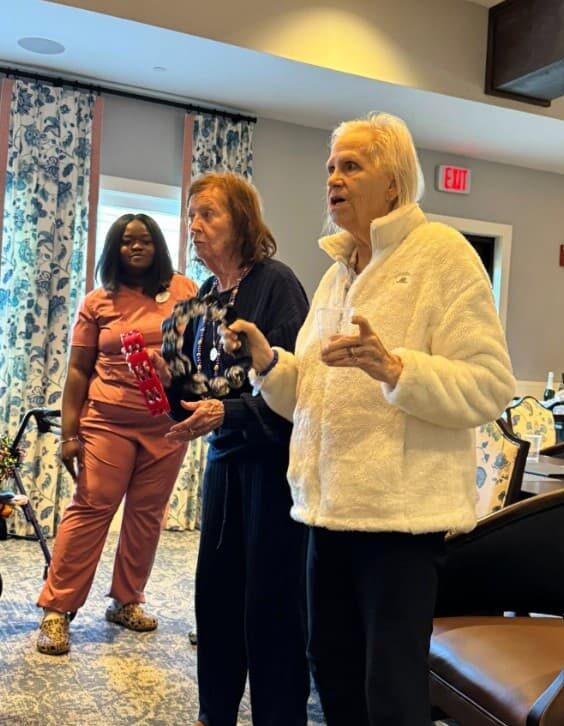

When a Short-Term Stay Becomes the Safest Next Step
Families usually recognize this moment through small realities that start adding up.
A parent needs help getting up, but says they are fine. Medications are now spread across the counter. Meals require more effort than expected. The person recovering gets tired halfway through the day. A spouse or adult child is trying to hold everything together, yet the routine already feels difficult to sustain.
This is often the point when a short-term stay deserves serious consideration.
What families are often seeing
Some signs are easy to miss because they do not always look dramatic at first.
- walking is possible, but still unsteady
- bathing and dressing require assistance
- energy drops sharply by afternoon
- medications need supervision
- the home setup is still not ideal for recovery
- one caregiver is carrying too much of the daily load
Each one may seem manageable on its own. Together, they can create a situation that feels increasingly fragile.
Why this stage can become risky so quickly
The issue is rarely one single event. It is accumulation.
A missed medication.
Too much time alone.
Fatigue during a transfer from bed to chair.
An uneven routine with meals, hydration, or rest.
A caregiver trying to solve every detail while already exhausted.
This is why families often begin to ask a harder question. Not whether their loved one is improving, but whether the current setting can support that improvement safely.
When temporary support makes practical sense
A short-term stay can be especially useful when recovery still needs structure and the family needs reinforcement.
That may happen:
- after rehab, when progress is real but daily life still requires help
- after a hospital stay, when strength and routine have not fully returned
- during a period of caregiver strain, when support at home has become difficult to maintain
- before a larger care decision, when the family needs time to observe what level of help is truly needed
What this kind of stay can help protect
Families are often trying to protect several things at once.
- recovery that still feels delicate
- safety during everyday routines
- the energy and health of the caregiver
- the ability to make thoughtful decisions without rushing
- a smoother transition into whatever comes next
That is part of why short-term support can be so valuable. It gives the situation more steadiness when the household itself is carrying too many variables.
How Monark Grove Greystone supports this transition
Monark Grove Greystone supports this transition by offering short-term respite care with 24-hour personalized support, which can be especially helpful when an older adult needs assistance with medications, daily routines, meals, or mobility after rehab, hospitalization, or a demanding period at home.
A useful question to ask at this stage
Before deciding that home is the next step, families often benefit from asking:
Do we have the support, energy, and setup to manage this recovery well right now?
That question can change the whole conversation.
Porque una cosa es seeing progress. Otra es having the right conditions to support it well.
How a Temporary Stay Can Bring Clarity to a Bigger Decision
What a short-term stay allows families to evaluate
During a temporary stay, families can begin to see patterns that are hard to measure in the middle of stress.
Daily function
How much help is truly needed with dressing, bathing, walking, meals, or medication routines?
Energy and stamina
Is recovery improving week by week, or does the day still become too difficult after a few hours?
Safety
Are there ongoing concerns around falls, confusion, missed medications, or time spent alone?
Routine
Does the older adult do better with more structure, regular meals, and consistent support throughout the day?
Caregiver capacity
Was the previous routine difficult but manageable, or has it become too demanding to sustain well over time?
These questions can change the conversation. Families move from guessing to noticing.
A useful way to think about it
A temporary stay can work as a real-life assessment period.
It gives families the chance to observe:
- what kind of support improves the day
- which tasks are still too difficult to manage alone
- whether recovery is moving toward greater independence
- whether more consistent help may be needed going forward
This kind of clarity matters because many families are trying to decide between very different next steps. Returning home with a new plan. Extending support. Exploring assisted living more seriously. Reorganizing care responsibilities within the family.
Those decisions are easier to make when they are grounded in lived experience.
Questions families can ask during this period
These questions can help turn a temporary stay into a more useful decision-making window:
- Which parts of daily life still require the most assistance?
- What seems easier with structured support in place?
- What continues to feel fragile or inconsistent?
- Is the older adult regaining confidence, or becoming more dependent?
- What would need to change at home for a safe return to feel realistic?
- If care continues at this level, can the family sustain it well?
A simple three-part framework
Families often benefit from sorting what they see into three categories:
Improving
What is clearly getting better?
Examples:
- walking longer distances
- remembering medications more consistently
- eating better
- needing less help with personal care
Uncertain
What still varies from day to day?
Examples:
- fatigue
- balance
- confusion in the evening
- willingness to participate in routines
Ongoing
What continues to require regular support?
Examples:
- medication management
- bathing assistance
- mobility supervision
- meal preparation
- emotional reassurance throughout the day
This framework helps families separate temporary recovery issues from needs that may remain longer term.
What clarity often looks like in real life
Sometimes clarity means realizing that a loved one may be able to return home, but only with better planning, added support, and a more realistic routine.
Sometimes it means understanding that recovery is still active, and a little more time in a structured setting could prevent setbacks.
Sometimes it means seeing that the conversation is no longer only about recovery. It is about quality of life, consistency, and the level of support that helps someone feel safest and most comfortable each day.
That kind of clarity is valuable because it replaces rushed decision-making with informed judgment.
Looking for Short-Term Assisted Living in the Greystone or Birmingham Area
For families in Greystone and the greater Birmingham area, short-term assisted living can be a useful option when recovery still needs support, caregiving at home has become too demanding, or a temporary stay would make the next step easier to manage.
At Monark Grove Greystone, this kind of stay can offer more than a place to land for a few days or weeks. Families can find personalized support available around the clock, a fully furnished private residence, and a community setting designed to feel connected, comfortable, and attentive to individual needs. For an older adult navigating recovery or a family trying to regain stability, that combination can make daily life feel far more manageable.
If you are exploring short-term assisted living in the Greystone or Birmingham area, Monark Grove Greystone may be a valuable place to begin the conversation. Schedule your visit today.