



Suwanee benefits from something many fast-growing towns lack: coherence. Its growth followed a plan that still makes sense years later.
Here’s what that looks like in practice:
- Daily routes stay readable over time
Main roads are consistent. You do not need to relearn the town every few years. - Residential life stays close to essentials
Grocery stores, pharmacies, medical offices, and cafés remain within a manageable radius instead of drifting outward. - The town supports repetition, not constant adaptation
Routines can evolve slowly without breaking.
This matters because aging well is less about access to new things and more about maintaining what already works.
How Green Space and Everyday Movement Are Built Into Life in Suwanee
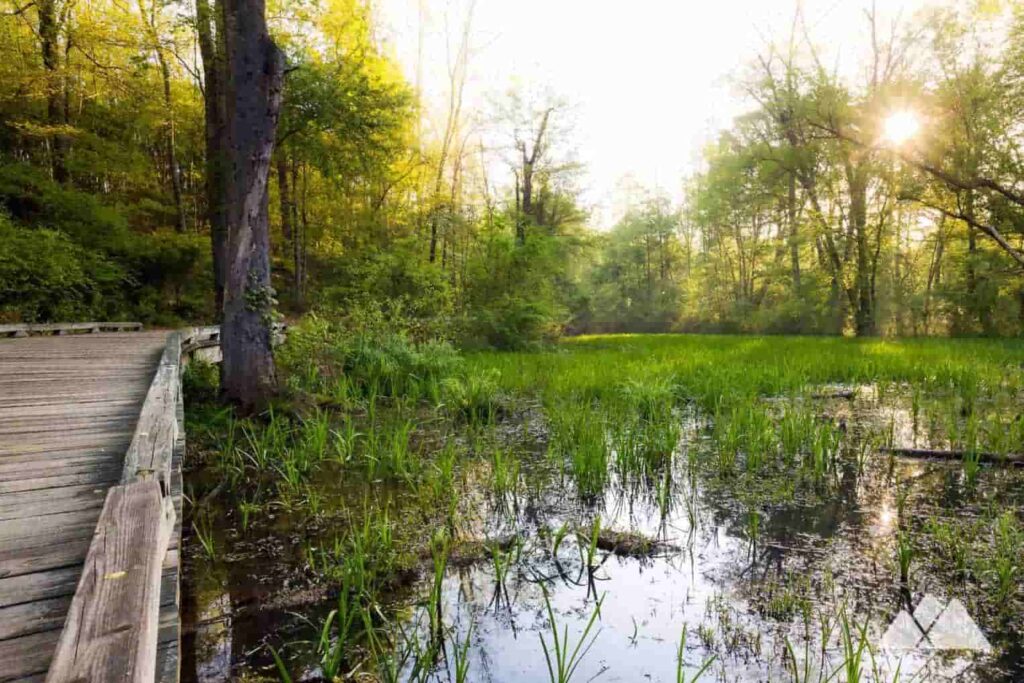
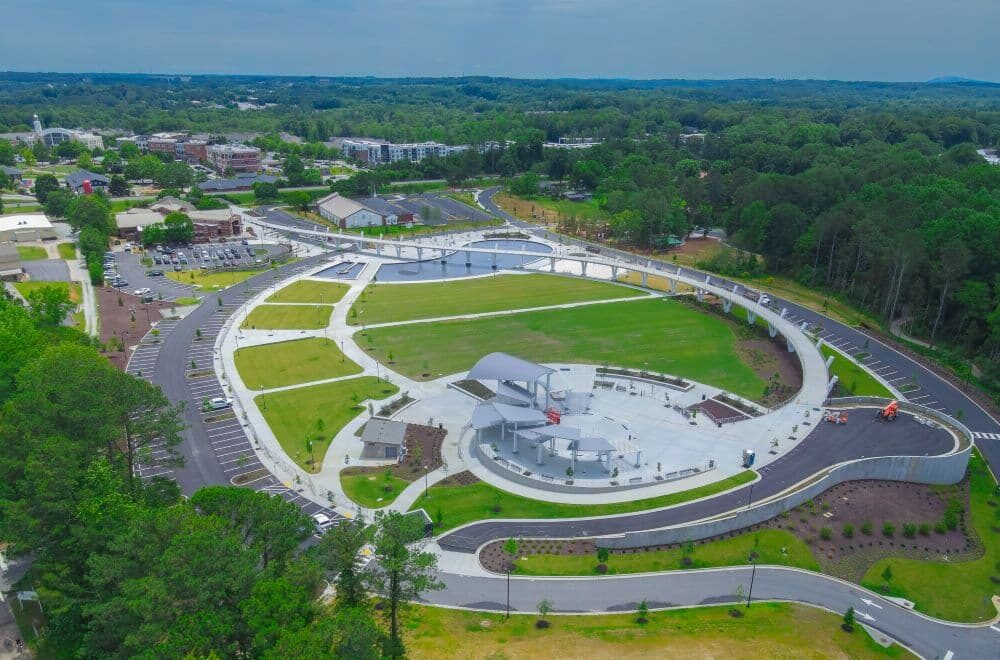
In Suwanee, green space and movement are not treated as separate ideas.
They function together, as part of how the town supports daily life over time.
This matters because aging well depends less on motivation and more on environmental support. When movement and outdoor access are easy, flexible, and repeatable, people stay active longer without having to plan or push themselves.
Why Placement Matters More Than Size
One of Suwanee’s strengths is where its green spaces are located.
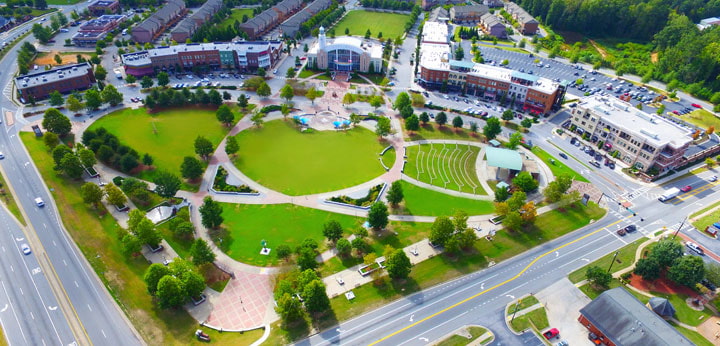
Instead of being pushed to the edges of town, parks and shared outdoor areas sit directly within daily circulation routes. A clear example is Suwanee Town Center Park.
Its role is practical:
✔ You encounter it while doing other things
✔ You can stop briefly without committing time or energy
✔ Events blend naturally into daily schedules
✔ Seating and shade encourage short, frequent visits
This kind of design supports consistency, which has a stronger long-term impact on physical and emotional health than occasional, high-effort activities.
Movement That Adapts Instead of Demands
Suwanee’s approach to movement recognizes a simple reality: energy levels change.
Rather than offering one version of “being active,” the town provides multiple ways to move, pause, and adjust. This becomes especially visible in larger spaces like George Pierce Park and along the Suwanee Creek Greenway.
Together, these spaces offer:
🚶♀️ Flat, paved paths that reduce strain and support daily walking
🌳 Continuous shade and tree cover that make outdoor activity manageable year-round
🪑 Frequent seating and rest points that normalize pausing
🛤 Longer trail options for days when stamina allows more distance
Why This Design Supports Independence Longer
From a planning and health perspective, environments like this do something critical:
- They lower the physical and psychological barriers to staying active
- They reduce fall and injury risk by encouraging shorter, repeatable movement
- They allow habits to survive changes in mobility, balance, or endurance
This is why towns with integrated green space and adaptable movement patterns tend to support independence longer than places that rely on structured fitness or scheduled activities alone.
Healthcare Access Without Turning Life Into Appointments
Here’s something families notice quickly.
In Suwanee, healthcare is present without becoming the organizing force of daily life.
- Clinics and practices follow the same logical road patterns as everything else.
- Appointments fit into the day instead of reshaping it.
- Visiting family members can navigate easily without feeling lost or overwhelmed.
This balance helps care feel integrated rather than intrusive, which matters emotionally as much as practically.
How Social Life Grows Through Everyday Moments
Suwanee does not depend on constant programming to keep people connected.
Its social fabric is built into the town itself, through proximity, repetition, and shared routines.
Connection here tends to grow from everyday overlap rather than scheduled activities.
Here’s how that shows up in real life:
📚 Libraries as daily meeting points
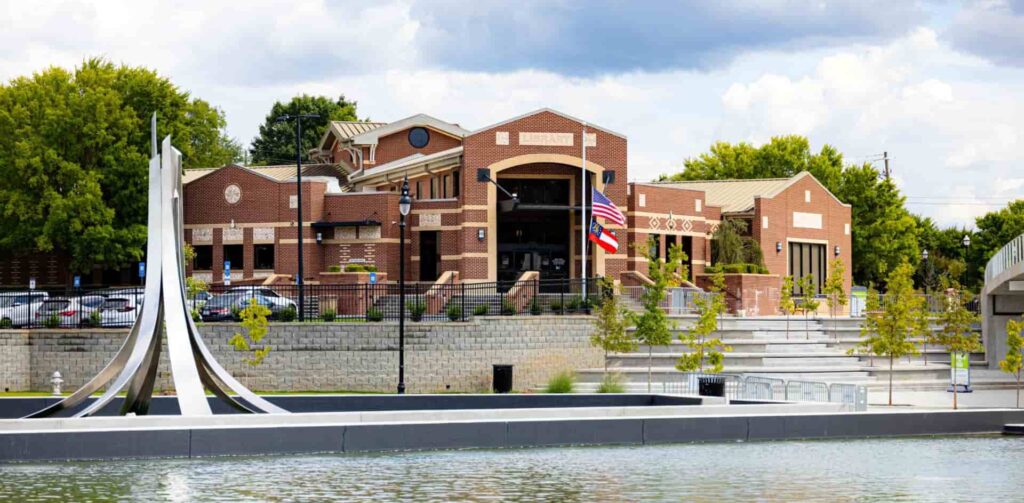
The Suwanee Branch, Gwinnett County Public Library stays active throughout the day, not just during events. People come to read, attend small talks, join discussion groups, or simply spend time in a familiar space. Over weeks, faces become recognizable. Conversations start naturally.
☕ Cafés that function as social anchors
Local cafés and casual dining spots act as informal gathering places. These are spaces where people linger, return regularly, and begin to recognize staff and other patrons. Social interaction here does not require introductions. It grows from repetition.
🎶 Community events that mix generations
Events at Suwanee Town Center bring together residents of different ages without separating them into categories. Concerts, seasonal festivals, outdoor gatherings, and weekend activities encourage shared experiences rather than segmented programming.
🌿 Public spaces designed for lingering
Benches, shaded areas, and walkable layouts invite people to pause. Staying a few extra minutes often leads to conversation. These moments add up over time.
Why Suwanee Appears Early in Long-Term Planning Conversations
Suwanee tends to enter the conversation before a decision is urgent.
That alone says something important.
Families often begin looking at places like Suwanee during a phase of evaluation rather than crisis. The town aligns well with a planning mindset because it allows people to project forward without having to imagine drastic change.
Several factors contribute to this.
First, daily life already feels workable.
Errands, transportation, healthcare access, and social interaction fit into routines that do not feel fragile. When people assess whether a place can support them long term, they look for environments that do not require constant optimization just to function.
Second, the town scales with changing needs.
Suwanee supports gradual adjustment. Distances remain manageable. Familiar routes continue to make sense. Access points stay consistent. This allows people to imagine staying in the same geographic context even as priorities shift.
Third, planning does not feel like giving something up.
One of the reasons families postpone planning is fear of loss: independence, spontaneity, connection. In Suwanee, planning feels more like refinement than replacement. Life does not need to be restructured all at once.
Because of this, conversations around Suwanee often start earlier, when choices can still be made thoughtfully rather than quickly.
This early consideration changes the tone of decision-making. Planning becomes grounded. Transitions feel incremental. Families move from reacting to anticipating, which is one of the strongest indicators of long-term confidence and well-being.
What This Means for Families Thinking Ahead
This pattern shows up consistently in how people evaluate Suwanee:
- They ask how life might feel five or ten years from now, not just today.
- They consider whether the town can absorb change without disruption.
- They value environments that allow continuity alongside flexibility.
Suwanee supports that way of thinking, which is why it so often becomes part of the conversation earlier than expected.
How Our Senior Living Community Extends the Way Suwanee Supports Aging Well
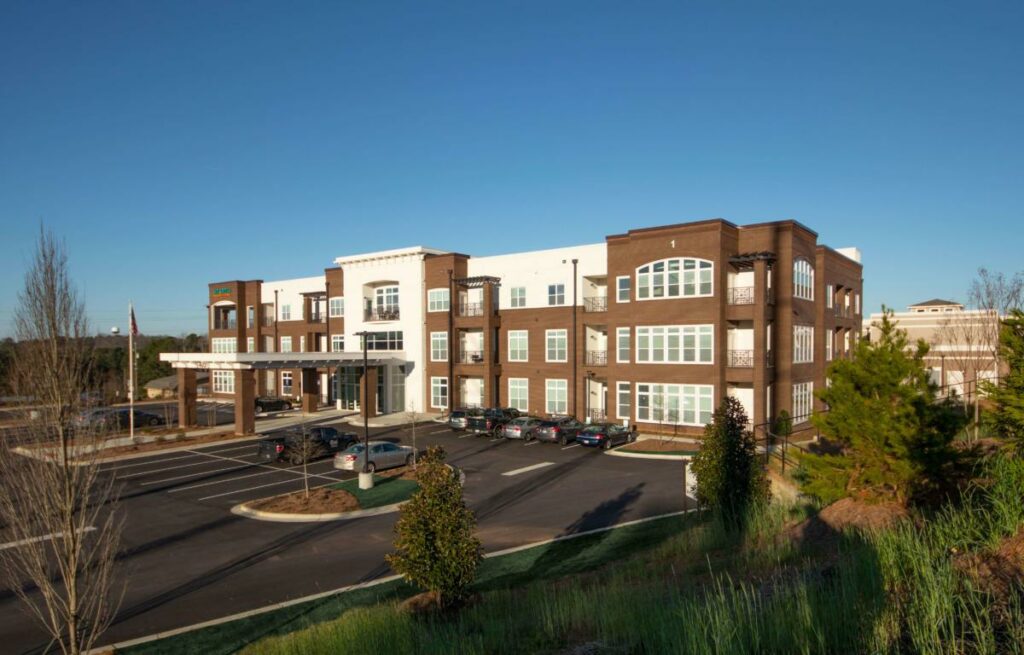
A Senior Living Community Designed Around Daily Flow
Instead of separating life into rigid phases, The Overlook at Suwanee offers a structure that allows people to remain in the same environment as their needs evolve.
Within one setting, residents have access to:
- Independent Living for active, self-directed days
- Assisted Living for moments when support becomes helpful
- Memory Care for specialized, compassionate care
This design reduces disruption. Familiar spaces, routines, and relationships remain in place, even as levels of support change.
What Daily Life Looks Like Inside the Community
Life here tends to unfold in ways that mirror the rhythm of Suwanee itself.
Examples residents often mention:
- Mornings shaped by personal routines, not household maintenance
- Shared meals that feel social without obligation
- Activities chosen based on interest, energy, or curiosity
- Easy access to outdoor spaces, courtyards, and walking paths
- Evenings that balance connection and quiet
The goal is not to fill every hour, but to make each day feel complete without effort.
Staying Connected Without Losing Independence
One of the main concerns families express when exploring senior living is autonomy.
At The Overlook at Suwanee, independence is supported through choice:
- When to participate and when to step back
- How to structure the day
- Which activities feel meaningful
Support is available in the background, allowing residents to remain confident and engaged while knowing help is close when needed.
If Suwanee already feels like the kind of place where life flows more easily, a guided tour at The Overlook at Suwanee can help you see how that same rhythm continues at home.
SCHEDULE YOUR TOUR TODAY!