




Tip 1: Do a “First 72 Hours” Comfort Plan
Sleep, Meals, Medication, and Quiet Time
Why it works: The first 3 days set the emotional baseline for settling in.
72-Hour Quick Plan (copy/paste checklist):
- Sleep: Match their usual bedtime and bring one familiar sleep item (pillow/blanket).
- Meals: Pick 2 safe foods and keep consistent meal times.
- Medication: Share an updated list and confirm who manages dosing.
- Quiet time: Block one daily low-stimulation window (no visitors, no decisions).
Micro-goal: One restful night + one predictable meal + one calm break each day.
Ask the team: “What’s the calmest routine we can follow for the first 72 hours?”
Tip 2: Reverse-Engineer Their Old Routine and Rebuild It Inside the Community
Why it works: Familiar rhythm reduces stress. A “new place” feels safer when daily life still feels recognizable.
The 15-Minute Routine Map:
Write down their old routine using 4 anchors:
- Wake-up cue: (coffee, shower, prayer, music, news)
- Midday pattern: (walk, nap, calls, errands, TV)
- Evening wind-down: (dinner time, show, bath, reading)
- Comfort rituals: (favorite chair, snack, hobby, quiet time)
Rebuild it in senior living (keep 2–3 anchors):
- Match timing first (even if the activity changes).
- Replace “place-based” habits with community equivalents (walk loop instead of neighborhood, lounge chair instead of porch).
- Keep the same order of steps (shower → breakfast → news), because sequence matters.
Micro-goal: Same wake-up cue + same evening wind-down for 7 days.
Ask the team: “What’s the closest match here to their usual routine, and what time is it easiest to keep it consistent?”
Tip 3: Ask the Team About Their “Peak Energy Hours” and Plan Around Them


Some residents are sharpest at 9:30 AM. Others don’t fully “turn on” until after lunch. If you schedule activities (or family visits) at the wrong time, it can look like they’re not adjusting, when it’s really just timing.
What to ask (simple, specific):
- “When do you notice they have the most energy and clarity?”
- “What time do they seem more tired, anxious, or overstimulated?”
- “If we want one activity to go well this week, when should it happen?”
How to use the answer (fast strategy):
- Put social stuff (activities, dining room, new introductions) during peak hours.
- Put quiet tasks (appointments, paperwork, long conversations) in lower-energy windows.
- Make family visits shorter + earlier if evenings trigger fatigue or irritability.
Tiny test that works:
For 3 days, try one activity only, scheduled at their peak hour. If engagement improves, you’ve found the best window.
Tip 4: Create a “Who’s Who” Map of Staff and Neighbors to Reduce Social Friction
In the first weeks, “I don’t know anyone” can feel heavier than the move itself. A simple Who’s Who map lowers awkwardness, builds familiarity fast, and makes it easier for your loved one to ask for help without feeling exposed.
Make it ridiculously easy (3 names is enough):
Create a tiny list on their phone, a note card, or the fridge:
- 1 go-to staff member: the person they see most often (care partner, concierge, dining staff)
- 1 friendly neighbor: someone who smiles, says hi, or has something in common
- 1 activity connector: the staff member who runs the group they might actually enjoy
Add a “why I know them” tag (this is the magic):
- “Maria, dining, likes decaf tea.”
- “Ken, neighbor, was in the Navy.”
- “Tasha, activities, runs painting on Tuesdays.”
Micro-script for introductions (no pressure):
“Hi, I’m ___ . I’m still settling in. What’s your name?”
(That one sentence removes the expectation to be “social” right away.)
Micro-goal: One familiar face per day. Even a 10-second hello counts.
This reduces social friction because it turns the community from “a crowd” into a small, navigable world.
Tip 5: Use the Dining Room Strategically
Pick consistent meal times to build familiarity
The dining room isn’t just about food. In senior living, it’s one of the fastest ways to create orientation, confidence, and belonging. Consistency beats variety at the beginning.
Think of meals as “daily anchors”:
- Same time = less decision fatigue
- Same flow = faster comfort
- Familiar faces = easier conversation over time
What to do (without making it a big deal):
- Choose one meal to keep consistent for the first 1–2 weeks (often breakfast or lunch).
- Aim for the same time window (even a 20–30 minute range helps).
- If possible, pick the same section of the dining room for a while.
A smart move most families miss:
Ask staff: “When is the dining room calmest?”
Starting at a quieter time reduces overwhelm and makes it easier to eat well.
If appetite is low:
Go for short visits + familiar choices. One calm meal is more valuable than three stressful ones.
Micro-goal: One consistent meal time for 10 days.
That alone can make the community feel predictable and “known.”
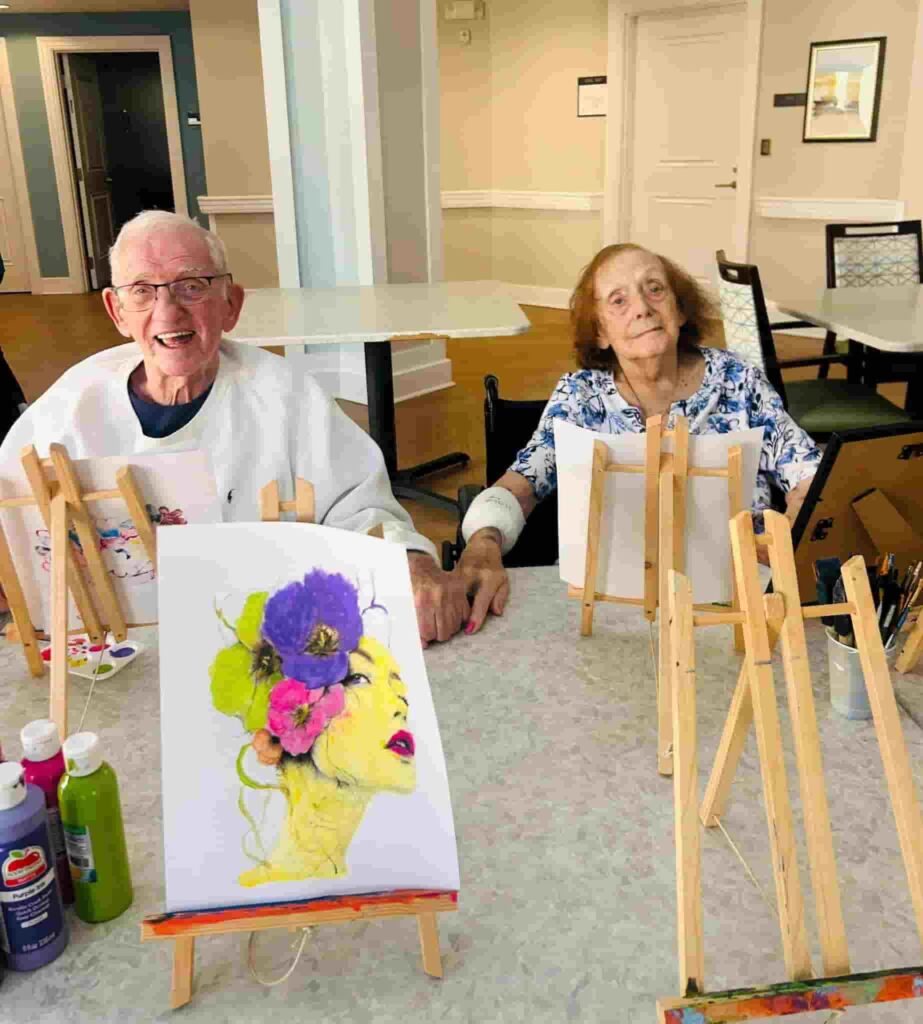
Tip 6: Set Up a Low-Pressure Social Anchor
One club, one table, one friendly face.
When someone is new to a senior living community, “making friends” can feel like a performance. A social anchor removes pressure by giving them one predictable point of connection they can return to again and again.
Pick ONE anchor (not three):
Choose what feels most natural for your loved one right now:
- One club: a small group with structure (cards, walking, crafts, book chat)
- One table: a familiar spot at one consistent meal (same section, same time)
- One friendly face: a staff member or neighbor who’s warm and steady
How to choose the right anchor (quick filter):
- Low noise, low chaos
- Easy to leave early without awkwardness
- Clear “what do we do here?” structure
- Matches their identity (not what you wish they’d like)
Make it effortless to repeat:
Instead of “Try different things,” go with:
“Let’s do the same one twice this week.”
Repetition builds comfort faster than novelty.
Tip 7: Bring Familiar Sensory Cues
Because the nervous system settles before the mind does.
A new senior living community can feel “too bright, too loud, too different” even when everything is kind. The fastest way to create comfort isn’t more decoration, it’s sensory familiarity: the small cues their body already trusts.
Think in 4 senses (pick 2–3 only)
Scent
- their usual lotion, shampoo, soap, a lavender sachet, a favorite candle alternative (battery diffuser)
Sound
- one playlist they’ve loved for years, an audiobook voice they know, white noise at night
Touch
- the robe they always reach for, familiar sheets, a throw blanket, slippers, a hoodie
Taste
- the same tea, the same crackers, the same mint, the same “small comfort” snack
The “3 Comfort Cues” rule
Choose three cues and keep them consistent for the first two weeks.
Consistency teaches the brain: I’m safe here.
Build a tiny “Reset Kit”
Keep a small bag in the room with:
- one calming scent
- headphones or speaker
- one comfort texture (blanket/robe)
- one simple snack or tea
Use it when they feel overstimulated, homesick, or socially drained.
Tip 8: Coordinate One Micro-Goal Per Week With the Care Team
Mobility, hydration, mood.
When families try to “support everything” at once, adjustment feels messy. A single weekly micro-goal turns the first month in a senior living community into something measurable, calmer, and easier to improve.
The rule: one goal, one week, one metric
Pick one category:
Mobility (confidence + independence)
- Example micro-goal: “Walk to the dining room once a day.”
- Metric: 1 daily check-in (yes/no)
Hydration (energy + cognition)
- Example micro-goal: “Finish one full water bottle by 3 PM.”
- Metric: bottle refilled or not
Mood (belonging + emotional stability)
- Example micro-goal: “One short social touchpoint per day.”
- Metric: hello, activity, or meal with others
How to set it up (2-minute script)
Ask:
- “What’s one small goal that would make the biggest difference this week?”
- “What’s realistic for them right now?”
- “How will we track it in a simple way?”
Why micro-goals work (especially early on)
- They reduce overwhelm for your loved one and the family
- They help staff personalize support quickly
- They create early wins, which builds motivation
Tip 9: Plan Family Visits So They Support Independence
Without accidentally creating dependence.
Family visits can be comforting, but early on they can also reset the adjustment process if your loved one starts to feel like “home only happens when you’re here.” The goal is to make your presence stabilizing, not necessary for the day to work.
Start with a visit rhythm (simple and predictable):
- Keep visits shorter but consistent in the first 1–2 weeks.
- Choose a time of day when they’re usually calmer (their peak energy hours help here).
- Avoid stacking multiple visitors in the same day.
Make the visit “about the place,” not an escape from it:
Try activities that connect them to the community:
- Eat one meal there together
- Walk the same hallway route
- Sit in a common area for 15 minutes
- Attend one low-pressure activity for a short time
Use a clean exit (so goodbyes don’t feel like abandonment):
Instead of “I have to go,” try:
“I’ll see you on ___ . I’m leaving you right when things are calm.”
Then hand off to a staff member they recognize if possible.
Each visit should leave them more familiar with the community than before you arrived.
Tip 10: Track the Right Signals of Adjustment
Sleep, appetite, engagement, and mood.
In the first few weeks, progress can look “invisible” day to day. The easiest way to know if your loved one is truly settling into senior living is to track a few signals that reflect comfort and stability.
Watch these 4 signals (not “are they happy yet?”)
1) Sleep quality
- Are they sleeping longer or waking less often?
- Do mornings look calmer than week one?
2) Appetite and hydration
- Are they finishing more of their meals?
- Are they drinking steadily, not just at night?
3) Engagement
- Are they leaving their room at least once a day?
- Do they participate for even 10 minutes, then stay a little longer over time?
4) Mood and emotional regulation
- Fewer “I need to go home” moments
- Less irritability, less overwhelm, more neutral or steady days
The 30-second tracker (keep it simple)
Once a day, rate each one from 1–5:
Sleep / Appetite / Engagement / Mood
That’s it. Patterns matter more than single days.
What improvement usually looks like:
Small wins like “ate breakfast twice this week” or “went to one activity for 15 minutes” are real adjustment signals.
If you’re visiting communities and want a place that pays attention to the details that actually shape adjustment, we’d love to show you how we support that early transition at The Goldton at Lake Nona. Come tour and ask us about our settle-in approach for the first month—we’ll help you know what to watch for and what to do next.